Technology
Sinkom: A Complete, Easy Guide to Understanding Its Meaning and Value


Introduction
In today’s fast-changing digital world, new terms and concepts appear quickly, and many people search online to understand what they truly mean and how they can be useful. One such term creating curiosity is sinkom. Whether you heard it in a business discussion, saw it online, or came across it while researching modern systems, understanding it clearly can save time and confusion. This article explains the concept in simple English, focusing on clarity, real-life relevance, and practical value. By the end, you will have a strong grasp of how it works, why it matters, and how it may shape future developments.
What This Concept Really Means
At its core, this concept refers to a structured way of connecting different elements so they work together smoothly instead of separately. The main idea is coordination, efficiency, and shared outcomes. Rather than focusing on one isolated part, it looks at the full system and how each part supports the other. Many people misunderstand it as something complex, but in reality, it is based on logical organization and smart communication. When systems are aligned, errors reduce, productivity improves, and results become more predictable. This approach is widely appreciated because it simplifies complicated processes and helps people make better decisions using shared information.
Will You Check This Article: Eric Weinberger Wife: Alexandra Kreisler, Life & Story
How It Works in Real-Life Situations
In practical use, this system operates by aligning goals, tools, and communication channels. Imagine multiple teams working on the same project. Without coordination, delays and confusion happen. With proper alignment, tasks flow naturally. Information is shared on time, responsibilities are clear, and outcomes improve. This method is not limited to technology; it also applies to business planning, education systems, and even personal productivity. When applied correctly, sinkom helps reduce wasted effort and ensures that everyone involved understands both their role and the final objective, leading to smoother operations.
Key Benefits for Individuals and Organizations
One major advantage is clarity. When systems are aligned, people know what to do and why it matters. Another benefit is efficiency, as fewer resources are wasted on fixing mistakes or repeating tasks. It also improves trust because transparency becomes part of the process. For organizations, this approach supports growth by making scaling easier and more controlled. For individuals, it helps manage time, focus on priorities, and reduce stress. Over time, these benefits compound, creating a strong foundation for consistent performance and long-term success across different environments.
Common Use Cases Across Different Fields
This approach is widely used in business operations, digital platforms, education planning, and project management. In business, it supports teamwork and clear workflows. In digital systems, it ensures smooth data flow between platforms. Educational institutions use it to align curriculum goals with teaching methods and student outcomes. Even in creative industries, it helps teams collaborate without losing originality. The flexibility of sinkom makes it suitable for both small-scale and large-scale applications, proving its value across industries where coordination and consistency are essential.
Challenges and How to Overcome Them
While the concept is powerful, challenges can appear during implementation. Resistance to change is common, especially when people are used to working independently. Another challenge is poor communication, which can weaken alignment. These issues can be solved through clear leadership, proper training, and open feedback channels. Starting small and gradually expanding the system helps build confidence. With patience and consistent effort, the benefits outweigh the initial difficulties. Over time, teams adapt, and the system becomes a natural part of daily operations rather than an added burden.
Future Potential and Growing Importance
As systems become more interconnected, the need for structured alignment continues to grow. Automation, remote work, and global collaboration all depend on clear coordination models. This is where sinkom becomes increasingly relevant. It supports adaptability while maintaining structure, which is essential in uncertain environments. Organizations that adopt such approaches early are often better prepared for change. Looking ahead, its principles are likely to influence how systems are designed, managed, and optimized, making it a key concept for future-focused thinkers.
Conclusion
Understanding and applying this concept can make a real difference in how systems perform and how people work together. By focusing on alignment, clarity, and shared goals, sinkom offers a practical solution to modern challenges. It simplifies complexity without removing flexibility, making it useful across industries and personal projects alike. As the world continues to evolve, approaches that encourage coordination and efficiency will remain valuable. Learning about this concept today can help you stay informed, adaptable, and prepared for tomorrow.
Frequently Asked Questions
What is the main purpose of this concept?
The main purpose is to create better alignment between different parts of a system so they work together efficiently. It focuses on reducing confusion, improving communication, and achieving shared goals with less effort and fewer errors.
Is it only used in technology-related fields?
No, it is used across many fields, including business, education, creative industries, and personal productivity. Any situation that involves multiple elements working together can benefit from this structured approach.
Does it require advanced technical knowledge?
Not at all. The idea is based on clear thinking and organization rather than technical complexity. Anyone can understand and apply its principles with basic planning and communication skills.
What are the biggest challenges when applying it?
The most common challenges are resistance to change and unclear communication. These can be addressed through gradual implementation, clear explanations, and consistent leadership support.
Why is it becoming more important today?
As systems become more connected and work environments more flexible, structured coordination is essential. This approach helps manage complexity, adapt to change, and maintain efficiency in modern settings.

Look, I’ll be honest with you.
When my electricity bill hit ₹8,500 last summer, I knew something had to change. The AC was running non-stop, and I felt like I was basically funding my electricity company’s next vacation.
That’s when I started seriously looking into solar panels for my home.
And here’s what I discovered: Going solar in India right now is probably one of the smartest financial decisions you can make. Especially with the government subsidies available in 2025.
But (and this is a big but), the amount of confusing information out there is overwhelming. Different vendors quote wildly different prices. Everyone claims their panels are “the best.” And don’t even get me started on trying to understand the subsidy application process.
So in this guide, I’m going to walk you through everything I learned – the real costs, how much you can actually save, and most importantly, how to avoid the mistakes I almost made.
Let’s dive in.
Why Solar Makes Sense for Indian Homes Right Now
Think about your electricity bill for a second.
Five years ago, you were probably paying ₹2,000-₹3,000 per month. Today? It’s likely doubled. And it’s not stopping there. Electricity tariffs in India have been increasing at roughly 6-8% annually.
Here’s the thing that changed my perspective: Solar panels are essentially a 25-year insurance policy against rising electricity costs.
You pay once upfront (and the government subsidizes a chunk of it), and then you’re generating free electricity for the next quarter-century. The math is pretty compelling when you think about it that way.
Plus, there’s something deeply satisfying about watching your meter run backward when your panels are pumping out power. I’m not going to lie – I check my solar app way more often than I should.
Understanding Solar System Types (Without the Technical Jargon)
Before we talk money, you need to know there are three types of solar systems. And choosing the wrong one is the #1 mistake I see people make.
On-Grid Systems are connected to your electricity supply. During the day, your panels generate power. Use what you need, and the excess goes back to the grid (they credit your bill). At night, you draw from the grid like normal.
Think of it like this: It’s a two-way street with your electricity company.
The advantage? It’s cheaper because you don’t need batteries. The downside? When there’s a power cut, your solar system also shuts down. Yeah, I know – seems weird, but it’s a safety feature.
Off-Grid Systems are completely independent. You’re storing all that solar power in batteries for nighttime use. Perfect if you live in an area with frequent power cuts or want complete energy independence.
But batteries are expensive. We’re talking an extra ₹80,000-₹1,50,000 depending on capacity.
Hybrid Systems give you the best of both worlds. Connected to the grid, but with battery backup. They cost more upfront, but honestly? If your area has regular power cuts, this is what I’d recommend.
For most urban Indian homes with reliable grid power, on-grid makes the most sense. That’s what I went with, and I haven’t regretted it.
The Real Cost of Solar Panels in India (2025 Breakdown)
Alright, let’s talk numbers. Because this is probably why you’re here.
Here’s what solar systems actually cost in India right now:
- 1kW system: ₹45,000 – ₹60,000
- 3kW system: ₹1,35,000 – ₹1,80,000
- 5kW system: ₹2,25,000 – ₹3,00,000
- 10kW system: ₹4,50,000 – ₹6,00,000
Now before you panic at those numbers, remember – you’re getting a significant government subsidy (more on that in a minute).
The price range exists because of quality differences. A Tier-1 brand like Tata Power Solar or Adani will cost more than a local brand. But here’s my advice: Don’t cheap out on panels. This is a 25-year investment.
I made the mistake of getting quotes from five different vendors, and the prices varied by almost 40%. Some were including installation, others weren’t. Some quoted for monocrystalline panels, others for polycrystalline.
Pro tip: Always ask for a detailed, itemized quote. And make sure it includes installation, net meter, and all electrical work. Otherwise, you’re comparing apples to oranges.
How Much Solar Capacity Do You Actually Need?
This is simpler than you think.
Grab your latest electricity bill. Look for the “units consumed” – let’s say you use 300 units per month.
Here’s the formula I used: Monthly units ÷ 120 = Required system size in kW
So, 300 units ÷ 120 = 2.5kW system
Why 120? Because a 1kW system generates roughly 4 units per day in India (that’s 120 units per month). Of course, this varies slightly by location – Rajasthan gets more sun than Kerala – but it’s a solid rule of thumb.
For most 2-3 BHK apartments consuming 200-400 units monthly, a 3kW system is the sweet spot. Independent houses with higher consumption might need 5-7kW.
One thing that surprised me: You don’t need to generate 100% of your electricity needs. Even a system that covers 70-80% of your consumption makes financial sense because you’re offsetting your highest tariff slabs.
The Government Subsidy: Your Secret Weapon
Okay, this is where it gets exciting.
The Ministry of New and Renewable Energy (MNRE) is currently offering subsidies that can reduce your costs by 40-60%. Yes, you read that right.
Here’s the breakdown:
- First 3kW: ₹18,000 per kW subsidy
- Above 3kW (up to 10kW): ₹9,000 per kW subsidy
Let me show you with a real example:
For a 5kW system:
- First 3kW: 3 × ₹18,000 = ₹54,000
- Next 2kW: 2 × ₹9,000 = ₹18,000
- Total subsidy = ₹72,000
So if your 5kW system costs ₹2,50,000, you’re paying just ₹1,78,000 after subsidy. Suddenly, it’s a lot more affordable, right?
But here’s the catch: You must use an MNRE-empanelled vendor to get the subsidy. Don’t let any vendor tell you they can “arrange” the subsidy if they’re not officially empanelled. I’ve heard horror stories of people losing their subsidy eligibility because of this.
The subsidy is credited directly to your account after installation and inspection. In my case, it took about 45 days post-commissioning. Some states are faster, some slower.
What About Space? Will Your Roof Be Enough?
Here’s a quick reality check: You need approximately 100 square feet of shadow-free roof space per kW.
So a 3kW system needs about 300 square feet. Most apartment terraces or independent house roofs have this easily.
The key word is “shadow-free.” That water tank casting a shadow at 2 PM? That’s going to reduce your output. Trees, neighboring buildings, your own parapet walls – they all matter.
During my site survey, the installer pointed out a vent pipe that was creating afternoon shadows. We repositioned four panels, and it made a 5% difference in generation. Small things matter.
Also, South-facing roofs are ideal in India, but East-West orientations work fine too. You’ll lose maybe 10-15% efficiency, but it’s not a dealbreaker.
The ROI That Actually Makes Sense
Let’s get to everyone’s favorite question: When do I break even?
With current subsidies and electricity rates, most homeowners see a payback period of 4-6 years.
Here’s my math:
- System cost after subsidy: ₹1,80,000 (5kW)
- Monthly electricity savings: ₹3,500
- Annual savings: ₹42,000
- Payback period: ~4.3 years
After that? Pure profit. For the next 20+ years, you’re generating free electricity while your neighbors watch their bills climb.
But here’s what makes it even better: You’re locked in at today’s generation cost. While electricity tariffs increase 6-8% annually, your cost per unit stays at zero.
Think of solar as buying 25 years’ worth of electricity at today’s rates. When you frame it that way, the decision becomes obvious.
The Installation Journey: What to Expect
The actual installation is surprisingly quick. Mine took six days from start to finish.
Day 1-2: They installed the mounting structure (basically the framework that holds the panels). Expect some drilling and noise.
Day 3-4: Panel installation and wiring. This is when it starts looking real. I probably took 50 photos during this phase.
Day 5: Inverter and net meter setup. The inverter is the brain of your system – it converts DC to AC power.
Day 6-7: Testing, commissioning, and showing you how the monitoring app works.
The only hiccup I faced was waiting for the net meter approval from my electricity company (DISCOM). The installation was done, but I couldn’t connect to the grid for two weeks. This varies by state – some are super efficient, others… not so much.
Choosing the Right Brand: My Honest Take
I spent way too much time researching brands. Here’s what actually matters:
- BIS certification (mandatory)
- 25-year performance warranty (standard in the industry)
- Local after-sales support (super important)
The big Indian names – Tata Power Solar, Adani Solar, Waaree, Vikram Solar – they’re all solid. I went with Adani, my neighbor chose Tata. We’re both happy.
Monocrystalline panels cost about 10-15% more than polycrystalline but are more efficient. In space-constrained installations, that efficiency matters. If you have plenty of roof space, polycrystalline works fine and saves money.
Here’s my unpopular opinion: Don’t obsess over getting the absolute highest efficiency panels. A 20% efficient panel vs. a 22% efficient panel won’t dramatically change your life. Focus on warranty, brand reliability, and after-sales service instead.
Maintenance: Less Hassle Than You Think
I thought I’d be up on the roof every weekend cleaning panels. Reality? I clean them maybe once a month, and that’s just hosing them down.
During monsoon, rain does most of the cleaning. In dusty months, a professional cleaning twice a year (costs around ₹1,500-₹2,000) is enough.
The monitoring app alerts me if generation drops suddenly. I check it weekly, mostly out of habit now. It’s oddly satisfying watching your system’s lifetime generation counter tick up.
Conclusion Final Thoughts: Should You Go Solar?
Here’s my straight answer: If you’re a homeowner planning to stay in the same place for at least 5-7 years, going solar is a no-brainer financially.
The subsidies are generous right now. Electricity costs keep rising. And the technology has matured to the point where it’s reliable and low-maintenance.
My only regret? I didn’t do it sooner.
Start by getting three quotes from MNRE-empanelled vendors. Ask them to visit your site. Compare not just on price, but on component quality and what’s included.
And remember – you’re not just installing solar panels. You’re taking control of your electricity costs for the next 25 years.
That’s pretty powerful when you think about it.
Introduction
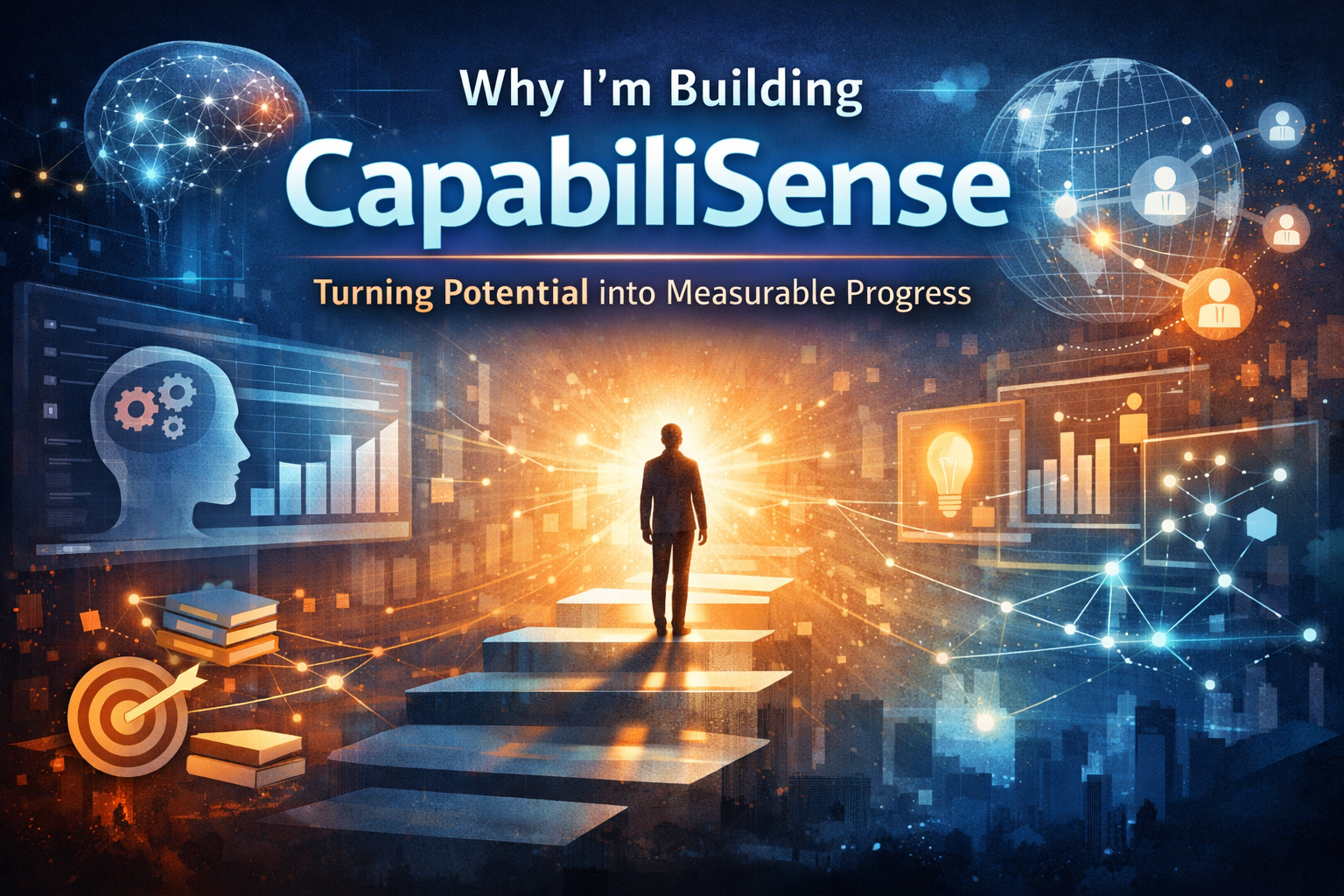
The question why I’m building CapabiliSense comes up more often than I expected, and for good reason. We live in a world overflowing with tools, platforms, and promises of growth, yet many people still feel stuck, unseen, or underestimated. I’m building CapabiliSense because I’ve watched talent go unnoticed, skills remain underused, and potential fade simply because there was no clear way to understand, develop, and express human capability. This article explains the deeper purpose behind CapabiliSense, what problems it aims to solve, and why it matters now more than ever. By the end, you’ll understand not just the platform, but the philosophy driving it.
Before diving deeper, it helps to understand what CapabiliSense represents at a glance.
| Aspect | Details |
|---|---|
| Platform Name | CapabiliSense |
| Core Focus | Human capabilities, skills, and growth |
| Primary Goal | Make abilities visible, measurable, and actionable |
| Audience | Individuals, teams, educators, and organizations |
| Core Belief | Potential exists everywhere, but clarity is rare |
The Personal Motivation Behind CapabiliSense
A Pattern I Couldn’t Ignore
The journey behind why I’m building CapabiliSense didn’t start with a business idea. It started with repeated frustration. I saw capable people passed over because they didn’t fit a neat label. I saw learners judged by grades instead of growth. I saw professionals boxed into titles that barely reflected what they could actually do. Over time, this pattern became impossible to ignore.
Will You Check This Article: Protocolo Operacional Padrão: A Complete Guide to Consistency and Safety
What struck me most was that these weren’t rare cases. They were everywhere. Friends doubted their value despite strong abilities. Teams struggled because hidden strengths were never surfaced. Organizations hired based on surface signals, then wondered why outcomes fell short. Capability was present, but invisible.
From Observation to Responsibility
At some point, observing a problem turns into owning it. I realized that complaining about broken systems wasn’t enough. If there was a way to sense, map, and communicate human capabilities more clearly, then it needed to be built. CapabiliSense emerged from that responsibility, not from a trend or market gap, but from a deeply human need for recognition and direction.
The Problem With How We Measure Ability Today
Credentials Don’t Tell the Whole Story
Degrees, resumes, and titles were never designed to capture the full range of human ability. They offer snapshots, not narratives. They explain where someone has been, but not how they think, adapt, or grow. This gap creates unfair judgments and missed opportunities.
In many systems today, people are evaluated once and labeled for years. That label often follows them longer than it should. CapabiliSense challenges this static view by treating ability as something alive, evolving, and deeply contextual.
Potential Is Dynamic, Not Fixed
One of the core reasons why I’m building CapabiliSense is the belief that potential isn’t a fixed trait. It changes with experience, environment, and mindset. Yet most existing frameworks assume the opposite. They lock people into categories that feel permanent.
CapabiliSense is designed around movement rather than labels. It acknowledges that someone can be strong in one context and still learning in another, without reducing their overall value.
What CapabiliSense Is Really About
Sensing Capabilities, Not Judging People
The name CapabiliSense isn’t accidental. It reflects the idea of sensing rather than judging. The platform is meant to observe patterns of ability, learning, and application over time. It doesn’t aim to rank humans, but to understand them better.
This distinction matters. Judgment creates fear and performance anxiety. Sensing creates curiosity and growth. CapabiliSense is built to support the latter, giving people insight into themselves without boxing them in.
Making the Invisible Visible
Many of the most valuable skills are subtle. Things like problem framing, adaptability, systems thinking, and collaboration rarely show up on traditional records. Yet they often determine success more than technical knowledge alone.
CapabiliSense focuses on surfacing these hidden strengths. By doing so, it helps individuals articulate their value and helps teams understand how to work together more effectively.
Why the Timing Matters Now
A World That Changes Too Fast
Another key reason why I’m building CapabiliSense is timing. The pace of change today is relentless. Skills become outdated quickly, roles evolve, and entire industries transform within years, not decades. In such an environment, static assessments are no longer useful.
People need continuous feedback loops, not one-time evaluations. They need systems that evolve as fast as they do. CapabiliSense is built with this reality in mind, offering a living view of capability rather than a frozen record.
The Rise of Self-Directed Growth
More people are taking ownership of their learning and careers. They’re exploring new paths, combining disciplines, and redefining success on their own terms. However, self-direction without clarity can feel overwhelming.
CapabiliSense acts as a compass. It doesn’t dictate where someone should go, but it helps them understand where they are and what directions are realistically available based on their capabilities.
CapabiliSense Across Different Use Cases
For Individuals Seeking Clarity
For individuals, CapabiliSense is about self-understanding. It helps answer questions like, “What am I actually good at?” and “Where am I growing?” This clarity builds confidence and reduces the noise that often surrounds personal development.
When people can see their capabilities evolve, motivation shifts from external validation to internal progress. That shift is powerful and lasting.
For Teams and Organizations
Teams often fail not because of lack of talent, but because talent is misaligned. CapabiliSense helps teams see complementary strengths and gaps without blame. It supports better collaboration by showing how different capabilities interact.
Organizations benefit by making more informed decisions about development, role design, and long-term growth. Instead of guessing, they can work with clearer signals.
A Real-World Scenario
The Missed Opportunity That Sparked an Idea
I once worked with a team where one quiet member consistently solved the hardest problems, yet remained overlooked. They weren’t vocal, didn’t self-promote, and didn’t fit the expected mold of leadership. Eventually, they left, and the team struggled.
That experience stayed with me. It highlighted how easily systems miss real capability when they rely on surface signals. CapabiliSense is, in many ways, a response to that kind of loss. It’s about ensuring that ability doesn’t have to shout to be seen.
The Philosophy Guiding CapabiliSense
Growth Over Comparison
Comparison is everywhere, and it’s exhausting. One of the philosophical pillars behind why I’m building CapabiliSense is moving away from constant comparison toward personal growth. The platform emphasizes progress over position.
When people focus on their own development, they collaborate more, learn faster, and burn out less. CapabiliSense reinforces this mindset through its design and feedback structures.
Humans Are More Than Metrics
While CapabiliSense works with data, it doesn’t reduce humans to numbers. Context, narrative, and reflection matter just as much as measurable signals. The goal is balance, not reduction.
By respecting complexity, CapabiliSense avoids the trap of oversimplification that plagues many assessment tools.
Challenges in Building Something Meaningful
Resisting Oversimplification
One of the hardest parts of building CapabiliSense has been resisting the urge to simplify too much. Human capability is complex, and pretending otherwise would undermine the mission. The challenge is creating clarity without distortion.
This balance requires constant iteration, listening, and humility. It’s slower, but it’s honest.
Building Trust Along the Way
Any system that touches personal growth must earn trust. That trust comes from transparency, respect, and consistent value. CapabiliSense is being built with these principles at its core, because without trust, insight is meaningless.
Conclusion
Understanding why I’m building CapabiliSense means understanding a belief in human potential that goes beyond labels, titles, and static judgments. CapabiliSense exists to make capabilities visible, growth measurable, and progress meaningful. It challenges outdated ways of assessing ability and offers a more human-centered approach to development. The key takeaway is simple yet powerful: when people truly understand their capabilities, they make better choices, build stronger teams, and create more fulfilling paths forward. CapabiliSense is not just a platform, but a commitment to seeing people more clearly and helping them grow with confidence.
Frequently Asked Questions (FAQs)
What is the main purpose of CapabiliSense?
CapabiliSense is designed to help people and organizations understand, develop, and apply human capabilities more clearly. It focuses on growth, not labels.
Who is CapabiliSense built for?
It’s built for individuals, teams, educators, and organizations who want deeper insight into skills and potential beyond traditional measures.
How is CapabiliSense different from assessments?
Instead of one-time judgments, CapabiliSense emphasizes continuous sensing of capability over time, respecting context and change.
Why focus on capabilities instead of roles?
Roles change quickly, but capabilities transfer across contexts. Focusing on them provides longer-lasting clarity and flexibility.
Is CapabiliSense about performance evaluation?
No, it’s about understanding and development. The goal is growth and alignment, not ranking or punishment.

Introduction
At first glance, 185.63.263.20 looks like a normal internet address—just another string of numbers quietly moving data across the web. But when you slow down and really examine it, something surprising appears. This address doesn’t actually follow the technical rules that govern how internet addresses work. That twist is exactly why 185.63.263.20 matters. It shows up in logs, discussions, and online tools, often causing confusion, misinterpretation, or even unnecessary concern.
In this in-depth guide, you’ll learn what this address represents, why it appears in the wild, how internet addressing truly works, and what to do if you encounter something like it. Whether you’re a curious learner, a system admin, or just someone who spotted this number and wanted answers, this article will give you clarity and confidence.
Understanding IP Addresses at a Human Level
An IP address is like a postal address for devices on the internet. It tells data where to go and where it came from. Without these addresses, online communication would collapse into chaos.
Will You Check This Article: Blogsternation .com: A Complete Guide to the Platform
Most people encounter IP addresses only when something goes wrong—an error message, a suspicious log entry, or a security alert. That’s when numbers like 185.63.263.20 suddenly feel important, even alarming.
But here’s the thing: not every IP-looking number is valid. And not every unfamiliar address signals danger. Understanding the structure behind these numbers changes how you interpret them.
Is 185.63.263.20 a Valid IP Address?
This is the core question—and the answer is simple but important.
No, 185.63.263.20 is not a valid IPv4 address.
IPv4 addresses are made of four numbers, each separated by a dot. Each number must fall between 0 and 255. The third segment in this address is 263, which exceeds the maximum allowed value.
That single detail changes everything.
Why IPv4 Addresses Have Strict Limits
IPv4 uses an 8-bit system for each segment, also called an octet. Eight bits can represent exactly 256 values, from 0 to 255. Anything outside that range simply doesn’t exist in this system.
Think of it like a clock that only goes from 1 to 12. If someone tells you the time is 14 o’clock, you know immediately that something’s off. The same logic applies here.
So when you see 185.63.263.20, you’re not seeing a real destination. You’re seeing a formatting issue, a placeholder, or an error.
Quick Reference Table: 185.63.263.20 at a Glance
| Attribute | Value |
|---|---|
| Address Format | IPv4-style |
| Valid IPv4 Address | No |
| Reason | Octet value “263” exceeds 255 |
| Routable on Internet | No |
| Common Appearance | Logs, misconfigurations, placeholders |
| Security Risk by Itself | None |
Why Does 185.63.263.20 Appear at All?
If the address isn’t valid, why does it show up?
This is where real-world systems get messy.
Logging and Parsing Errors
Many systems automatically log incoming or outgoing traffic. If data is malformed, truncated, or incorrectly parsed, a logging tool may still record it as-is. Over time, these odd entries accumulate and catch someone’s eye.
Placeholder or Dummy Data
Developers often use fake values during testing. An address like 185.63.263.20 might be intentionally invalid so it can’t accidentally route real traffic. It’s a safety trick, not a mistake.
Copying and Human Error
Sometimes the explanation is boring but honest. A number gets mistyped. A digit is swapped. Nobody notices until later, when someone searches for it and wonders what it means.
Can 185.63.263.20 Be Dangerous?
On its own, no.
An invalid address cannot send traffic, receive data, or interact with real devices. It doesn’t belong to a country, an organization, or a server. It’s essentially a digital dead end.
That said, patterns matter.
If you repeatedly see invalid addresses like 185.63.263.20, it may indicate:
- A misconfigured application
- Broken input validation
- Corrupted data sources
The risk isn’t the address itself. The risk is what caused it to appear.
How Systems Typically Handle Invalid IP Addresses
Different systems respond differently, depending on how strict they are.
Some reject the data instantly and throw an error. Others quietly accept it, store it, and move on. Older or poorly maintained systems are especially forgiving—and that’s not always a good thing.
In high-quality systems, invalid addresses are filtered early. They’re flagged, logged clearly, and never treated as real network endpoints.
185.63.263.20 vs Valid IP Addresses
To understand why this matters, it helps to compare it mentally with a valid address.
A valid address like 185.63.253.20 fits perfectly within the allowed range. It could belong to a hosting provider, a business server, or a home connection.
Change just one digit—from 253 to 263—and the entire address collapses into invalidity. That tiny difference has massive consequences.
It’s a reminder that internet infrastructure depends on precision. One wrong number changes everything.
Could 185.63.263.20 Ever Become Valid?
Not under current standards.
IPv4 rules are fixed, and they’re deeply embedded in how the internet works. There’s no flexibility on octet size. Unless the entire addressing system is reinvented—and globally adopted—this address will always remain invalid.
Newer addressing systems like IPv6 work differently, but even they follow strict formatting rules. Structure is non-negotiable in networking.
Real-World Example: A Log File Mystery
Imagine a system administrator reviewing access logs late at night. Everything looks normal until one line stands out: 185.63.263.20.
At first, it feels suspicious. Is it an attacker? A foreign server? A scanning attempt?
After closer inspection, the admin realizes the logging module recorded user input without validation. Someone entered an address manually, made a typo, and the system stored it anyway.
Problem solved. No threat. Just a lesson learned.
Why Understanding Addresses Like This Still Matters
You might wonder why an invalid address deserves so much attention.
Because misinterpretation wastes time.
People chase phantom threats, block nonexistent sources, or panic over numbers that have no real-world impact. Understanding why 185.63.263.20 doesn’t function saves effort and sharpens judgment.
It also improves communication. When teams share a common understanding, they troubleshoot faster and make better decisions.
How to Respond If You Encounter 185.63.263.20
The right response is calm and methodical.
First, confirm that it’s invalid. Then trace where it came from. Was it user input? Imported data? A third-party system?
Once you know the source, you can decide whether to ignore it, clean it up, or fix the underlying process. The key is not to overreact.
The Bigger Lesson Behind 185.63.263.20
This address teaches a quiet but powerful lesson: not everything that looks technical is meaningful. Sometimes numbers are just noise.
The internet runs on rules, and those rules create clarity. When something breaks those rules, it usually points to human error, not hidden intent.
Understanding that difference makes you more confident, more efficient, and far less likely to chase ghosts.
Conclusion
185.63.263.20 may look like an ordinary internet address, but it isn’t real in any technical sense. Its presence usually signals a formatting mistake, placeholder data, or logging issue—not a threat or destination. By understanding how IP addresses are structured and why limits exist, you gain the ability to interpret these situations calmly and accurately.
The takeaway is simple: knowledge removes fear. When you recognize invalid data for what it is, you stop guessing and start solving. That’s a powerful shift, no matter your level of experience.
Frequently Asked Questions (FAQs)
Is 185.63.263.20 a real IP address?
No. It breaks IPv4 rules because one segment exceeds the maximum allowed value of 255.
Can this address be traced to a country or provider?
No. Since it’s invalid, it doesn’t belong to any region, company, or network.
Should I block 185.63.263.20?
Blocking it has no effect. It cannot send or receive traffic in the first place.
Why do invalid IP addresses appear in logs?
They usually come from input errors, testing data, or systems that don’t validate entries properly.
Does seeing this address mean my system was attacked?
Not by itself. It’s far more likely to be a harmless data issue than a security event.